
I'm not a warrior — and that's okay.
From the Sunday Self-Care Chronicles | 4/19/26
Hello friend.
My husband and I stayed in the Val d'Orcia last week, and one of the things he was most excited to see were the filming locations of a couple of pivotal scenes in the movie Gladiator.
If you don't know the movie, Russell Crowe plays Maximus, a revered general turned slave then gladiator as he seeks to avenge the murder of his Emperor, his wife, and his son and restore the proper seat of power to Rome. It's full of bloody battles and clear lines between the good guys and the bad guys.
The film is full of epic vistas, including the beautiful manor house where his wife and son are killed as they walk along a dirt road lined with cypress trees, and the fields of waving grass that he runs his fingers through as he metaphorically makes his way to Elysium — meeting them in his mind while his body lays dying, bloodied but victorious, on the dirt floor of the great Colosseum.
We decided to do the relatively easy walk of the latter, known as The Gladiator Walk, just outside the walls of Pienza — to get a few clicks with the camera and possibly feel the depth of that scene as we walked the same path.
It took us a couple of tries to find the actual entry point, and along the way — before we even officially started — I managed to misstep on a gentle six-inch slope, sending me to my hands and knees and slightly twisting my left foot.
In the moment, nothing felt too damaged — a bit of stinging on my palms, some dust on my pants, the top of my left foot a little overstretched. But all in all, my pride was more damaged than anything physical. So I decided I was up for walking it off — the entire two miles, down then up a very steep hill — so Dathan could get his pictures on what was truly a perfect weather day.
Afterwards, we walked around the walled town, taking in the smells and sights, before settling into a lovely little café for some delicious bruschetta and pizza.
As we left, I noticed my foot had tightened up a little — but it wasn't until we arrived at our next destination about 30 minutes later that I realized it wasn't just tight. It was really painful.
We got our luggage inside to our new lodgings, and through every painful step I realized my foot was not okay and that I probably wasn't walking anywhere else anytime soon.
Luckily, being a massage therapist, I know a little bit about basic first aid care — so I laid on the bed, elevated my foot, got a bag of ice from the lovely staff, and took a couple of ibuprofen. I sent Dathan out into the walls of Montepulciano to enjoy exploring the town, with a request to bring back some kind of short stretch bandage if he could find a farmacia.
As I laid there consulting one of my anatomy apps, studying the ligaments and tendons that create what is known as an anatomical stirrup around the foot, I recognized the irony of busting my foot through a simple slip — not on the famed Gladiator Walk, whose hills do hold the potential for some rough footing, but by just stepping in the wrong place.
Thankfully, my hubby hero delivered in short order, so that by the time we headed out to dinner a few hours later, the rest, ice, elevation, and compression of the bandage he bought made it bearable to carefully navigate the cobbled streets. And the bottle of very good red wine didn't hurt the walk home either. 😉
But it got me thinking: despite the geographical name of my injury, I was certainly not a gladiator, nor a warrior — merely clumsy, and without the forethought to recognize that those first subtle signs of pain might have been a precursor to something worse.
When I was in massage therapy school, and then studying oncology and critical care massage, we didn't learn just about anatomy and how to treat conditions with our hands. We discussed the people we were working with and how each individual comes to an experience with their own feelings and perspectives.
We talked about the common tongue of battle language — how for some it can offer a real source of support, while for others it feels inappropriate or even unfair — and that it really wasn't our place to use it unless they did first.
In cancer land — especially with breast cancer — we are often assigned certain titles, labels, or even colors, simply because of our diagnosis.
"Battle" language is a common part of the cancer vernacular, dating back to Richard Nixon and the National Cancer Act, but it doesn't resonate with all of us and it's certainly something I have never felt terribly comfortable with.
Growing up high risk for breast cancer meant being exposed early to the cultural story of what it means to be a patient or a survivor — and not just navigating my own emotions around that, but absorbing everyone else's too. It always felt like breast cancer didn't just take my breasts; it tried to erase my identity by making me a symbol of a diagnosis instead of an individual going through my own completely unique experience.
For me, I have never felt like a warrior when it came to facing cancer.
I have never liked the words "fight" or "battle" — because I knew too many people who had died, and it never seemed fair to say they lost.
I suppose you could call me brave, but I'm also not sure I had any other choice. Brave is being afraid and doing it anyway. I was more afraid of dying than I was of going through surgery or chemotherapy — so brave never felt like the right way to describe those actions. It was more just showing up to the lesser of two evils.
I choose to treat this type of language as "patient's choice," just like the word survivor (and many others) — so if it works for you, I'm so glad, and I hope you use it proudly for yourself.
But if it doesn't fit — if it feels too overpowering or somehow misaligned — just know that I see you and I understand. And I hope this email will inspire all of us to be a little more thoughtful with the language we assign to others — and a little more gentle with ourselves when the words we're handed don't quite fit.
So tell me: since your diagnosis, how many times has someone called you brave? Or a fighter? Or a warrior? Or referenced your battle with cancer?
How did you feel about it? Do you use these words to describe yourself and your experience?
Hit reply and let me know — I'll validate you either way.
Until next week, I'm always in this with you.

Love, Amy
P.S. If you are still navigating the nuances of life after a breast cancer diagnosis — regardless of how recent or long ago that is — please consider signing up for my free "starter kit," The Survivorship Starting Point, or sharing it with a friend. I created it from the intersection of personal and professional experience in cancer land to help others reorient to life beyond diagnosis and treatment. SIGN UP HERE: https://www.amyhartl.com/starter-kit
P.P.S. If you are a bit of a travel bug — or would simply like to follow along while I'm in Europe on sabbatical this spring — check out my new travelogue, He Plans, She Packs, over on Substack. It's free, it's fun, and there are cobblestones involved. FOLLOW ALONG HERE: https://heplansshepacks.substack.com
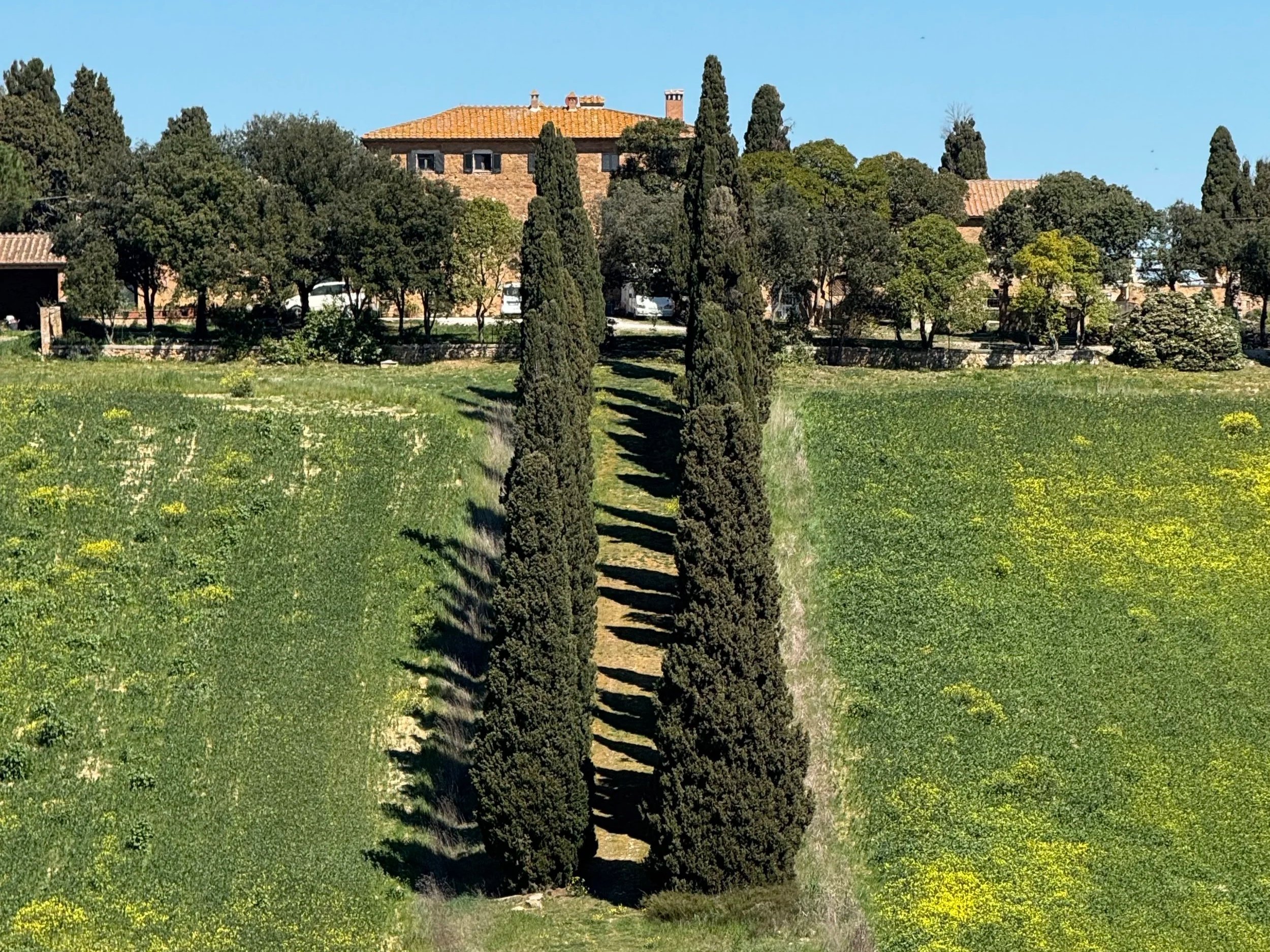
“Maxiumus’s house” in the movie Gladiator.
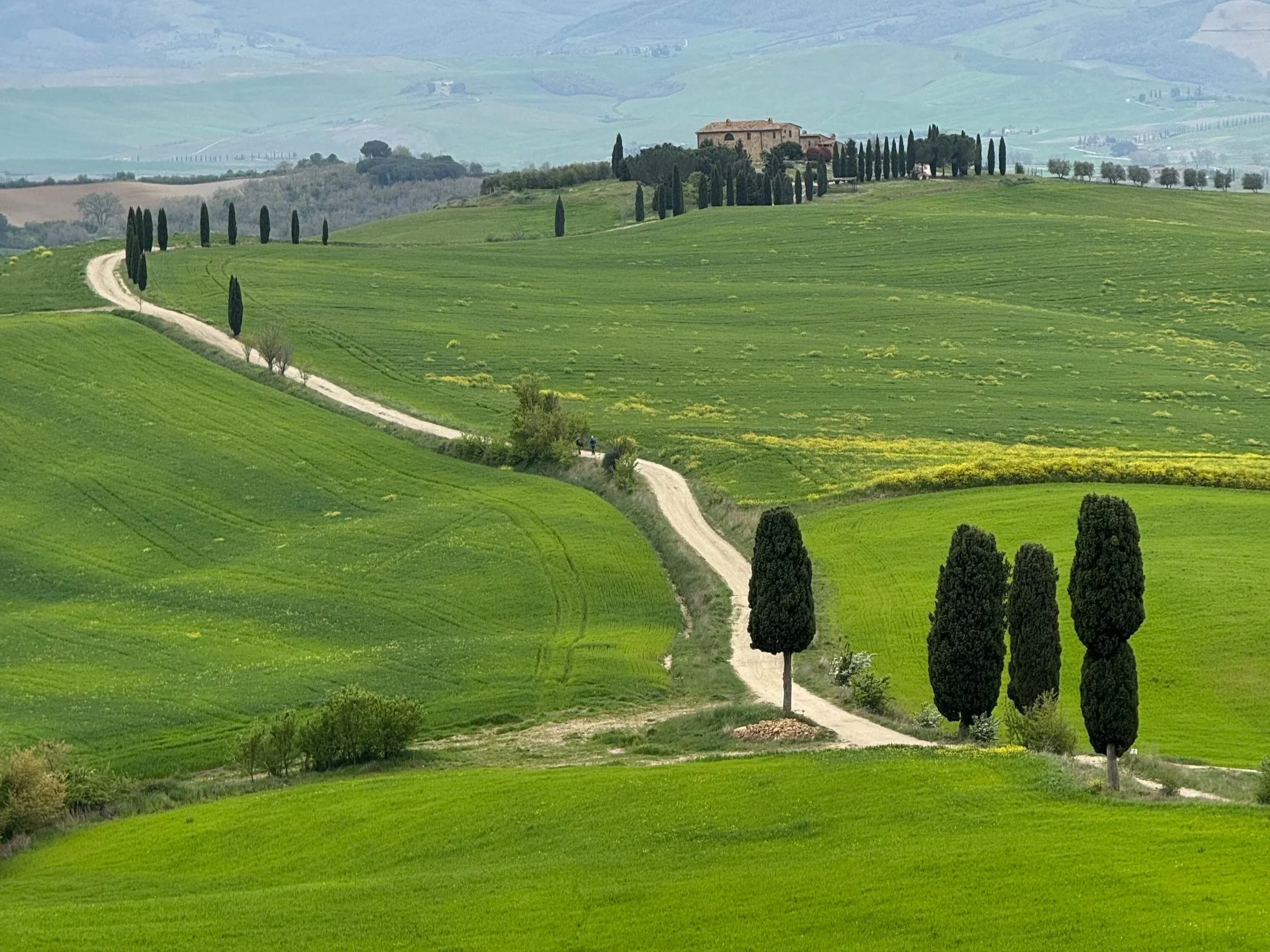
The “Gladiator walk” outside Pienza, IT.